The Need for Backup and Replacement Alarm Callout Systems

Standalone and SCADA Based Alarm Callout Systems are widely used in Industries to alert operating personnel of  out of range operating conditions vial voice, email, and SMS notifications. Both replacement and backup alarm callout systems can be necessary with existing standalong and SCADA based callout systems.

Replacement Alarm Callout Systems are required for critical industrial processes when:

  • Alarm Callout System are Unreliable
  • Technology Obsolence
  • Systems Unmaintainable

Backup / Redundant Alarm Callout Systems are required when:

  • Existing system have been or can be affected by diasters like hurricanes and flooding.
  • Redundancy is required for critical processes / infrastructure.

Alarm System Unrelible

  • POTS Wireline is unreliable.
  • Cellular Coverage is unreliable in remote area.

Alarm System Uunmaintainable

  • Legacy Alarm Systems application / configuration software made non functional by operating system upgrade.
  • Maintenance Staff does not have familiarity with existing Alarm Callout System.
  • System is remote and requires reconfiguration. Existing systems do not have remote configuration ability.

Technology Obsolence

  • Software based Dialer Systems are made non functional by operating systems upgrade.
  • POTS landline have been or are being eliminated.
  • Legacy Cellular Dialer Systems are obsoleted by 3G Sunseting/Shutdown,

Resilency from Diaster 

  • Satellite based Alarm Callouts offer resilency from diaster affecting landline and cellular systems.
  • Standalone systems backup against existing local or complex software / SCADA based callout systems.

SCADALink Solutions

SCADALink SatSCADA Platform and IOT100 offer a solution for the needs for alarm Callout replacement and backup.

 

Testing Satellite SCADA Communications for Critical Remote Mine Water Supply Sites

Recently, a client commissioned us to identify and implement a Wireless SCADA Communications Solution for their critical remote mine water supply sites in Idaho.

This presented a unique set of challenges due to the geographical isolation of the locations and the necessity for reliable, real-time data transmission for effective monitoring and control. Our mandate was to explore various wireless technologies and determine the most suitable option to ensure uninterrupted monitoring and control of the water supply infrastructure.

Inaccessible Terrain

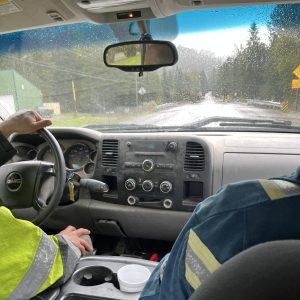
During the winter and spring, there is limited site access with access only by tracked vehicles due to the mountainous terrain and elevation. During the harsh winter and spring months, the remote mine water supply sites experience severely restricted access due to challenging terrain and high elevations. The only viable means of reaching these critical locations during this period is through the use of tracked vehicles, highlighting the logistical complexities involved in maintaining essential infrastructure in such demanding environments.


To ensure reliable SCADA communications for critical remote mine water supply sites, we conducted an RF Path Study and Onsite Path Testing.

The Radio Frequency (RF) Path Study involved an in-depth analysis of the terrain, potential obstructions, and atmospheric conditions between the central control station and the remote mine sites. This evaluation utilized path profiles, area maps, coverage maps, and terrain maps.

Onsite Path Testing

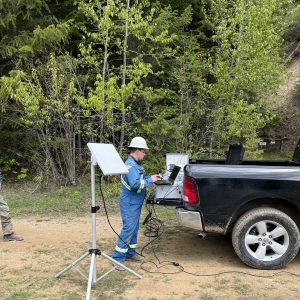
Onsite Path Testing was conducted to validate the predictions of the RF Path Study and assess real-world signal performance.

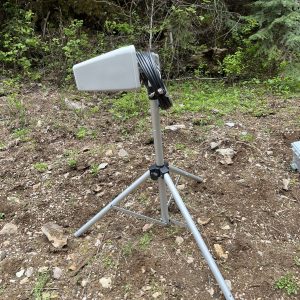
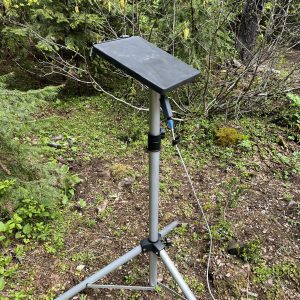
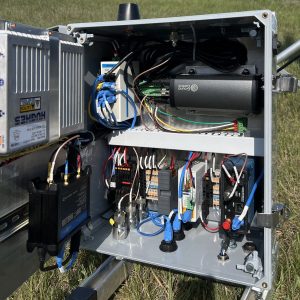
During the Onsite Testing, we deployed cellular and multiple satellite communications options at the proposed sites and assessed signal strength measurements:

By conducting both the RF Path Study and the Onsite Path Study, we could assess the feasibility and reliability of each solution with respect to the terrain and tree coverage.

At this site it was found that the extreme heavy tree coverage affects Low Earth Satellite Based Communications solutions like Starlink and Iridium. We found that Cellular and BGAN (GEO Satellite) were the optimal SCADA communication solutions due to the clear path to the cellular tower or to the GEO Satellite.  In this manner, the onsite RF Path Study ensures dependable SCADA communications for the critical remote mine water supply sites. 

Cellular SCADA Communications Troubleshooting

The pervasiveness of Cellular Data Communications has prompted its use in many SCADA, Remote Monitoring, Data Logging, and Video Surveillance applications.

There are instances where the deployed cellular communications is unreliable or has become unreliable. This can be caused by equipment failure,  lack of cellular network coverage, changes in cellular network coverage, or weather related RF path challenges.

When the site or sites are at remote locations that are difficult to access and the application is mission critical it is necessary to follow the proper troubleshooting procedures to ensure that the cellular communications problem is promptly resolved.

The following steps are recommended to repair unreliable cellular communications systems:

  • Cellular Path Study
  • Onsite Cellular Path Test

Path Study

Utilize Cellular Tower Location Apps and RF Path Coverage Software to determine expected cellular signal levels prior to site visit. This is done to understand the terrain and optimal antenna pointing and minimum required antenna heights.

Onsite Cellular Signal Testing

Onsite Cellular Signal testing is performed to verify signal reliabilty for proposed deployments or to troubleshoot communication problems at existing sites.

The following steps are performed during onsite cellular signal testing.  Note that spare/test equipment (modem, jumper, lightning arresters, antenna) must be be brought for troubleshooting in event of finding a equipment failure.

Measure Received Cellular Signal with a Cell Phone, Cell Phone Signal App, and/or Cellular Signal Analyzer. A Cellular Signal Analyzer is preferred as it has external antennae connection.

Verify Cellular Signal Strength with the Existing Cellular Modem System using its Modem Diagnostics.

Test the VSWR of Antenna, Cable, Lightning Arrester using an Antenna Analyser to insure there is no problem with the antenna system.

Test Antenna Pointing & Height. Use a pipe mast if elevated antenna height is required.

Test System Fade Margin With Variable RF Attennuator after cellular signal signal is optimized. It is recommended that you have 15 to 20 dB of fade margin.

Use Ping Test on cell modem to determine end to end commuications reliability.

Test with Alternate Cellular Modems. Existing cellular modem may be defective or they may not support current 4G / 5G technology.

Test Alternative Antennae systems including YAGI and/or Diversity Antennaes.

Test Coverage with Alternatve Carriers or Dual Carriers / Dual SIM.

Test Backup Satellite Communications Path (Starlink, BGAN, Iridium) if cellular communication coverage at site is found to be unreliable.


Portable Starlink Connectivity using SCADALink SatConnect Mobile

SCADALink SatConnect Mobile is designed to provide rapid deploy WAN and Internet Connectivity anywhere using via Starlink, Cellular and WiFi Connectionivity.

The SCADALink SatConnect Gateway housed in Rugged Mobile Case, the system can be made operational just by supplying 120 VAC or 12/24 VDC Power.  Portable Tripod Stands provide elevated mounting of the Starlink, WiFi, and Cellular Antennas to alleviate RF obstruction by vehicles and structures. 


Features

Plug and Play

The SatConnect Mobile is engineered for simple and hassle-free deployment. Its plug-and-play functionality means that users can get it up and running within minutes without extensive technical expertise. This ease of setup makes it an ideal solution for emergency deployments, temporary worksites, and other applications where rapid connectivity is crucial.

Portable and Easy Shipment

The SatConnect Gateway is designed with portability in mind, making it easy to transport and deploy in any location. Housed in a rugged, weatherproof enclosure, it can be quickly set up at remote sites without need for specialized technicians.

Applications of SatConnect Mobile

The SatConnect Mobile can be used for:

  • Disaster Recovery
  • Emergency SCADA Connectivity
  • Remote Video Surveillance
  • Special Events
  • Remote Engineering and Construction Offices
  • Oil and Gas Services

Disaster Recovery

The SCADALink SatConnect Transportable provides Redundant High Speed Internet and WAN Connectivity. This can be useful in Disasters such Hurricane, Tornado, Flood and Fire Emergencies damaging or overloading communication infrastructure.

Emergency SCADA Connectivity

Industries such as oil and gas, pipelines, water systems and utilities depend on critical real-time monitoring of remote assets. When existing SCADA communications  infrastructure fails or is damaged by disasters, the SatConnect Mobile can be rapidly deployed to reestablish communications.  A SatConnect can be used at Plant, Well, or Pipeline site. Two SatConnect Units can be configured to extend Serial or Ethernet Links.  

Remote Video Surveillance

IP Camera networks can be connected to SCADALink SatConnect Mobile for Video Surveillance Applications directly via the POE Ethernet or WiFi.

Special Events

The Plug and Play operation of the SCADALink SatConnect Transport make it for idea for use in Special Events to provide WAN and Internet Connectivity for Electronic Payment, Ticketing, Streaming, Video Surveillance, and VOIP.

Remote Engineering and Construction Offices

Plug and Play Operation and High Speed Redundant Communications make the SCADALink SatConnect Transport ideal for Remote Construction and Engineering Offices where Reliable Remote Desktop, File Sharing, Web Meetings, and IP Telephony is required.

Oil and Gas Service

Plug and Play Operation and High Speed Redundant Communications make the SCADALink SatConnect Mobile ideal for Remote Oil and Gas Service Operations such as Drilling and Fracking

Learn more about SCADALink’s SatConnect for SCADA, OT, and IoT.

Deploying Temporary SCADA Communications Links to Restore Failed SCADA Communications

Temporary emergency SCADA Communications links can be deployed to restore failed SCADA Communication links.

SCADA Communications networks are most often implemented as private networks using licensed or unlicensed wireless RF networks; or with dedicated or leased lines. In the systems, SCADA Hosts (Master Station) communicates to Remote Outstations directly or indirectly via Repeater System(s).

Causes of SCADA Communications Failures

SCADA Systems may experience prolonged SCADA Communications outage due to equipment failure, extreme weather, path obstruction, or RF interference affecting the existing SCADA Communications network.

Equipment Failure/Damage

SCADA Communications Link can be affected by equipment failure at the outstations, master stations, or repeaters.

Failures could occur to the RF Transceiver equipment and antenna systems.

System outage will the prolonged if replacement equipment may is readily available or legacy equipment is obsolete.

Extreme Weather

Extreme weather conditions such as hurricanes, tornadoes, flooding or ice storms can severely damage equipment and cable infrastructure.

Sites with marginal RF paths can be adversely affected by harsh weather conditions that affect the RF path. Antenna icing can change the antenna beam pattern leading to signal attenuation.  Temperature inversions can affect RF path leading to signal lost.

RF Interference

SCADA Communications Link can be affected by RF interference from power lines and electrical substations.

Path Obstruction

Remote SCADA out stations may begin to experience unreliable SCADA Communications due to path obstruction from the construction of new buildings and infrastructure.

Mitigating Prolonged SCADA Communications Outages

Prolonged SCADA communications outages increase EHS risk and increase operations costs from extra operator site visits to monitor and operate the remote unmanned facilities.

Temporary emergency SCADA Communications links can be deployed to restore affected SCADA Communication links.The temporary communications links can be deployed for critical remote sites, or for repeater/hub sites.

Technologies for Deployment as Temporary Emergency SCADA Data Links

Cellular and Starlink Satellite can be invaluable technologies to deploy for rapid emergency SCADA Communications link repairs due to their ubiquiteous connectivity. In areas with good cellular network coverage, cellular modems can be used to replace failed or unreliable private RF links or wireline.  In remote areas without good cellular coverage,  Starlink Satellite can be used.

The SCADALink SatConnect integrating Cellular and Starlink Satellite technologies with VPN networking can serve as a rapid deploy temporary SCADA Communications link replacement.  With use of SatConnect and Layer2 VPN networking there is no SCADA Host, PLC/RTU configuration changes are required, minimizing time to repair and complexity.

Use of SCADALink SatConnect for Emergency SCADA Communications Links can be a good proof of concept for integrating cellular and satellite technologies in a SCADA communications network as a primary or backup link for critical remote sites.


Redundant Level Sensors in Critical Remote Monitoring Applications

In critical dam, pit, and pond level monitoring applications, redundant level sensors may be used to ensure reliable operation, increased uptime, and provide operational verification.

Using Level Switches to addition to Level Transmitters

For critical level monitoring applications, level switches can be used to augment level transmitters for alarm monitoring.  Level Transmitters  can be used as the primary sensor used for the level monitoring with Hi Level Alarm Setpoint.  An additional High Level Switch can be installed as a High High Alarm in the event of a level transmitter failure. The Level Switch can be also deployed as “Alarm Test” point, where operator can verify system alarm notification operation by lifting the  level switch.

Redundant Level Transmitters

Redundant level transmitters can be used to provide verification of level transmitter operation and accuracy. Properly operating level transmitters should track each other within the sensor accuracy. Level transmitters used could even be of the same type and model. The use of redundant level transmitters can be used to mitigate sensor or PLC/RTU I/O failure.

Cameras for Level Verification

IP Video Cameras can be used for remote verification of  level sensors. Cameras are especially effective when manual staff gauges installed at site. Even when no staff gauge is installed, video verification of the waterline relative to the shoreline can be an important cue in pond and dam level monitoring.


The Case for Redundant SCADA Communications

In mission critical Industrial applications such as Oil and Gas Production & Pipelines there is often the need for Redundant SCADA Communication.

When SCADA Communications fail, operations cannot continue to operate unmanned due to safety or environmental concerns.  Sometimes sites are configured to shutdown if there is extended SCADA Communications outage for these reasons.  Custody transfer measurement data may be lost if there is extended SCADA communications outage.

In these cases there is need to repair communications within a set time frame.

Redundant SCADA Communications can help prevent unwanted shutdowns and emergency repair situations.

Master Stations/Repeater Sites

Many SCADA Systems have Point to Multipoint Communications where multiple sites in a network are accessed from a single Master Site, via  Master Station Directly or Via Repeater Systems.  If the Master Station or Repeaters Systems Fail, multiple or all Remote site communications fail.

The first level of Redundancy to be considered would be redundancy of the Master or Repeater Site since failure at these sites will impact all sites.

Redundancy at Critical or High Value Remote Sites

Remote sites with high environmental impact such as high H2S levels sites or block valve/leak detectdion sites protecting rivers/lakes may required redundancy. Sites with high production rates often a candidate for redundant communication.

Difficult to Access Sites

Sites that are difficult to access may need rendundacy communications. These sites may be helicopter, skidoo, argo or ice road accessible only; or very far away.

Repeater Sites are commonly hard to access since they may be located on top of mountains or hills making for difficult access during heavy snow or rain conditions.

Equipment Redundancy

Communication Systems can fail due to equipment failures including the Communication Device (Radiomodem/Transceiver), the Antenna Systems, or the Power System.  Repair of the systems involves identifying the problem and replacing the failed component.

Redundant Equipment can be implemented as cold standby or hot standby.

Cold standby may be spare equipment that is left at site to be changed out when there is a failure. Equipment should be preconfigured and tested.

Hot standby redundancy involves having that equipment that can be immediately switched on or our automatically switched on when communications failure is detected.  Hot standby requires logic to detect communication failure. This could be ping type mechanisms in IP SCADA Communications networks to detection of serial communications in serial based SCADA Communications.  Hot standby requires also mechanism to turn transceivers on/off approriately and to connect antenna systems to operating transmitter.

Typically hot standby equipment are fit for purpose systems designed for this purpose.  An example of Equipment designed for hot standby are the Master Stations by  GE MDS – GE MDS SD4.  This equipment is provides for for manual or automatic failover.


Hot standby systems should be configured and periodically tested to ensure availability when required.  Cold standby should only be used if the operating company has trained technicians on staff to ensure that repair can be made in a timely manner.

RF Path Redundancy

RF Path Redundancy can be used to to protect against RF Fade or Interference; and/or Carrier Outage (Cellular, Satellite).  RF Path Redundancy can be SCADA Host Controlled, or via Network Controlled. SCADA Host Redundancy relies on the SCADA host application to control connectivity. Path is Network Controlled when Router Fail-Over is used.

The SCADALink SatConnect provides RF Path Redundancy by using Cellular and Starlink Satellite Links.

SCADALink SCADAConnect to Replace Failed or Obseleted SCADA Communications Links

The SCADALink SatConnect Gateway is designed to provide instant secure Remote SCADA Communications Connectivity to any site anywhere.

Restore Failed or Obseleted SCADA Communications Links

Use SCADAConnect to restore failed or obseleted SCADA Communications Links be it lease lines, radio, microwave, or cell.

Connect Remote Sites Outside Coverage of your Wireless SCADA Network

Use SCADAConnect to connect Remote Sites outside your existing SCADA Communication Networks.

Point to Multipoint

Connect any site to any other site.  Operations Centers, Control Rooms, Remote Sites, Mobile Sites.

Wireless Technologies

Integration of Internet, Radio, Cellular, and Satellite Technologies enable cost effective connectivity anywhere.

Ethernet or Serial Connectivity

SatConnect Gateway can provide Ethernet and Serial Connectivity from any site to any other site.

10/100 Base T, RS485, RS232, BEL202

Industrial Protocols

SCADAConnect will support all Industrial Protocols and Devices

Ethernet IP, AB-Ethernet, DNP3.0, BacNet, Modbus TCP, Modbus ASCII, Modbus RTU, FTP

Industrial Devices 

Connect all devices – PLC, RTU, Smart Instruments, Data Loggers, SCADA Hosts, HMI, Industrial Computer,  Building Management Systems, Security Alarm Systems, Video Surveillance Systems.

Plug and Play

SCADAConnect comes completely packaged and tested and ready for operation; and ready for rapid deploy.

Secure Private IP Network

SCADAConnect uses secure Private IP Networks and VPN Networking to ensure security.


Starlink Satellite Communications enables Remote Video Surveillance Applications

With high bandwidth and relatively low cost data, Starlink Satellite Connectivity enables Remote Video Surveillance at remote sites without reliable terrestrial communications via cellular, DSL, Cable, or Fiber Optics.

Real time video survelliance systems require high bandwidth and larger data volumes, less practical with Satellite Systems based on Inmarsat or Iridium.

Starlink with autopointing enables simple and rapid deployment of video surveillance systems at remote industrial construction, operations, logistics, and exploration sites in industries such as oil and gas, pipeline, and mining.

The SCADALink SatConnect Gateway is designed to provide plug and play sat/cellular connectity for remote industrial application such as video surveillance.

Serial Communications in Industrial Automation

RS232 and RS485 Serial Communication is,  and will remain widely used in Industry for PLC, RTU and Smart Instrumentation connectivity.

RS232 Connectivity for Device Configuration and Maintenance

RS232 connectivity has been used to configure and maintain intellgent devices. Even on IP devices a RS232 serial port (console port) is commonly used to set the IP address parameters include IP Address, Netmask, and Default Gateway.

Sometimes newer network devices did not have serial port in the goal of cost and power savings. Invariably you would lose the IP address or set it was wrong. Then you have to reset it to factory defaults so you could communicate to it again.  A RS232 console port would have been more convenient!  USB Ports have often been provided as a console ports.

On devices with RS232 console ports it often convenient to have both local or remote connectivity since the console port may have diagnotics function not available via other interfaces. Remote RS232 console port connectivity can be achieve by connecting console port to a terminal server such as the SCADALink IP100 Industrial Terminal Server.

RS485 Network for Device Connectivity.

RS485 has been used for multidropped network connectivity for PLC, RTU, and Instruments and will remain so for the future. Devices in SCADA & OT networks are networked with RS485 due to low cost, low power draw, and freedom from IP security concerns.  In addition smart instruments with Modbus RS485 can provide more diagnostic and analytics information that simple 4-20ma instrument.

The SCADALink A485 4-20ma to Modbus Converter has been designed to enable 4-20ma  instruments to be connected via Modbus RS485 where there limited I/O. The A485 can also provided additional parameter include min,max, and average readings in addition to instantaneous reading.

Laptops Without Serial Ports

Moderm laptops are now commonly manufactured without serial port as most people don’t need them or use them whereas it is deRigeur for Industrial Automation Geeks.

SCADALink USC USB to Serial Converters with RS232/RS485 is designed to provide easy connectivity to Industrial Devices requiring RS232/RS485 Serial Connectivity.